
Secure Your Strategic Seat at the Table: Master the three technical skills HR needs to lead in an AI-driven world
The Skills Gap Crisis
More than 70 per cent of Australian organisations have invested in HR technology over the past five years, yet the skills required to govern and audit these systems remain largely absent from traditional HR development pathways. The culprit is not the technology itself, nor employee resistance, but the widening gap between what HR professionals know exceptionally well and what AI systems demand of their human overseers.
Australian HR professionals bring deep expertise in industrial relations, workplace investigations and stakeholder management. They navigate complex frameworks, manage delicate situations and balance competing demands with sophistication. Even HR teams with strong analytical capability often find themselves underprepared for AI governance because data fluency and AI literacy are fundamentally different skill sets.
Where Technology Fails Without Human Capability
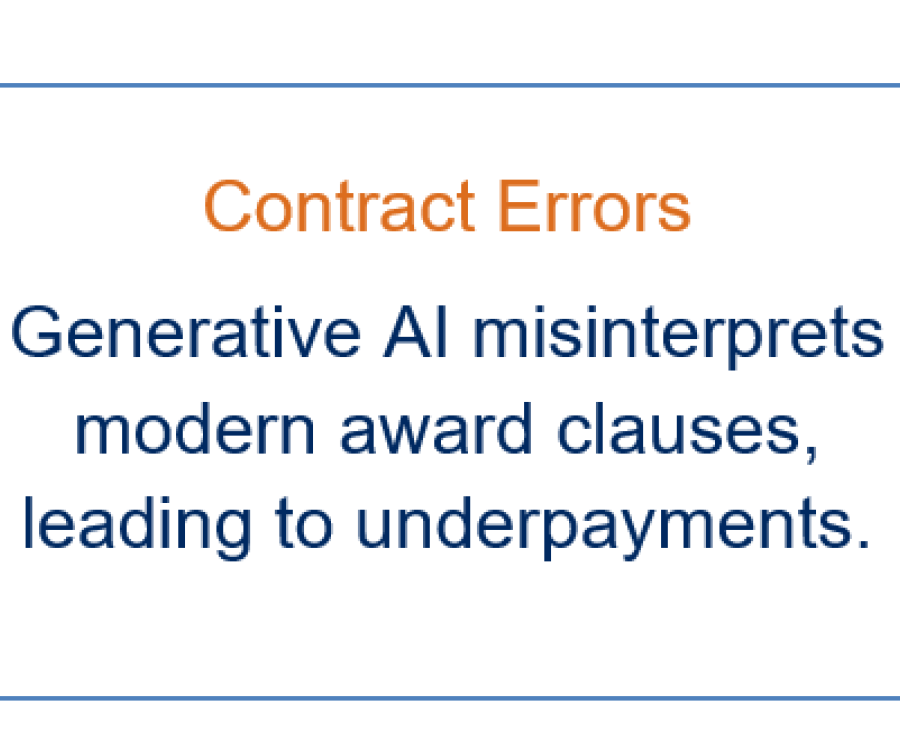
The issue shows up in predictable ways. A company invests in an AI-powered recruitment platform only to discover its shortlisting algorithm disadvantages candidates from certain postcodes. An executive team authorises a generative AI tool for drafting employment contracts, then faces an underpayments claim because the system misinterpreted a modern award clause. A people analytics suite gathers dust because nobody in the HR team can translate its probabilistic forecasts into actionable workforce strategy. In each case, the technology functions exactly as designed. The failure point is human capability.
A Preparation Problem, not a Competence Problem
This is not a competence problem. It is a preparation problem. HR professionals were trained for a world where compliance meant knowing the Fair Work Act, where bias was addressed through awareness training and policy guidelines, and where workforce planning relied on historical trends and professional judgement. That world still exists, but it now operates alongside systems that generate text, make predictions and recommend actions based on patterns invisible to human analysis. Managing these systems requires three specific technical competencies that sit outside traditional HR education.
Skill #1: From Policy Drafting to Prompt Engineering for Compliance
The first is the shift from policy drafting to prompt engineering for compliance. HR teams excel at writing policies, procedures and position descriptions. They understand the nuance required when documenting flexible work arrangements or performance improvement plans. Yet when that same team interacts with a generative AI system to produce a contract variation or respond to an employee query, many lack the technical skill to structure their request in a way that produces legally sound output.
Prompt engineering is not creative writing; it is a structured, testable skill that requires understanding how large language models interpret instructions, where they commonly fail and how to verify outputs against source material. An HR professional using AI to draft a response about personal leave entitlements under the National Employment Standards must know not only what the correct answer is, but how to frame the prompt to prevent the AI from conflating leave types, inventing entitlements or citing outdated legislation. They must also recognise when the AI has hallucinated information that sounds plausible but is factually wrong.
Skill #2: Algorithmic Bias Auditing
The second critical competency is algorithmic bias auditing. Australian organisations operate under some of the world’s strongest anti-discrimination protections, and HR practitioners know this legal landscape intimately. What they often lack is the technical literacy to interrogate the machine learning systems they may entrust to make consequential decisions about hiring, promotion and performance.
Algorithmic bias does not announce itself. It is embedded in training data that reflects historical inequities: leadership competency models biased toward one gender, recruitment algorithms trained on successful candidates from a narrow demographic, or performance systems that penalise caring responsibilities without explicit intent. When these patterns are encoded into AI, they replicate and amplify existing disadvantage at speed and scale, silently.
Understanding this requires more than awareness. It demands sufficient knowledge of machine learning fundamentals to ask the right questions of vendors and internal data teams. What data was the system trained on? How was success defined in the training set? Has it been tested for disparate impact across protected attributes? Re-reading these questions is instructive in itself, because the terminology is unfamiliar. Data scientists speak of protected attributes where HR professionals say protected characteristics, and of bias metrics where HR understands discrimination. Learning to govern AI means learning to speak a hybrid language that bridges legal compliance and machine learning. Can the system explain why it ranked one candidate above another? These are not abstract questions. They are necessary technical audits that prevent legal exposure and reputational damage.
HR professionals who develop this skill will become indispensable. They will occupy the rare intersection of legal knowledge, ethical judgment and technical competence. They can challenge a vendor’s claims, demand transparency from data teams and implement monitoring systems that catch bias before it becomes a discrimination claim.
Skill #3: From Retrospective Reporting to Predictive Literacy
The third competency represents the most significant strategic shift: moving from retrospective reporting to predictive literacy and workforce simulation. Traditional HR analytics answer the question “what happened?” through headcount reports, turnover rates or exit interview themes. This work is valuable, but it is historical. It informs understanding yet rarely shapes proactive decision making.
Predictive AI tools operate differently. They model scenarios, estimate probabilities and forecast consequences. What is the likelihood that a software engineering team will experience critical attrition in the next six months based on engagement data, market salary movements and historical patterns? If ten per cent of that team left, what would be the quantifiable impact on project delivery and revenue? Which interventions are most likely to mitigate that risk?
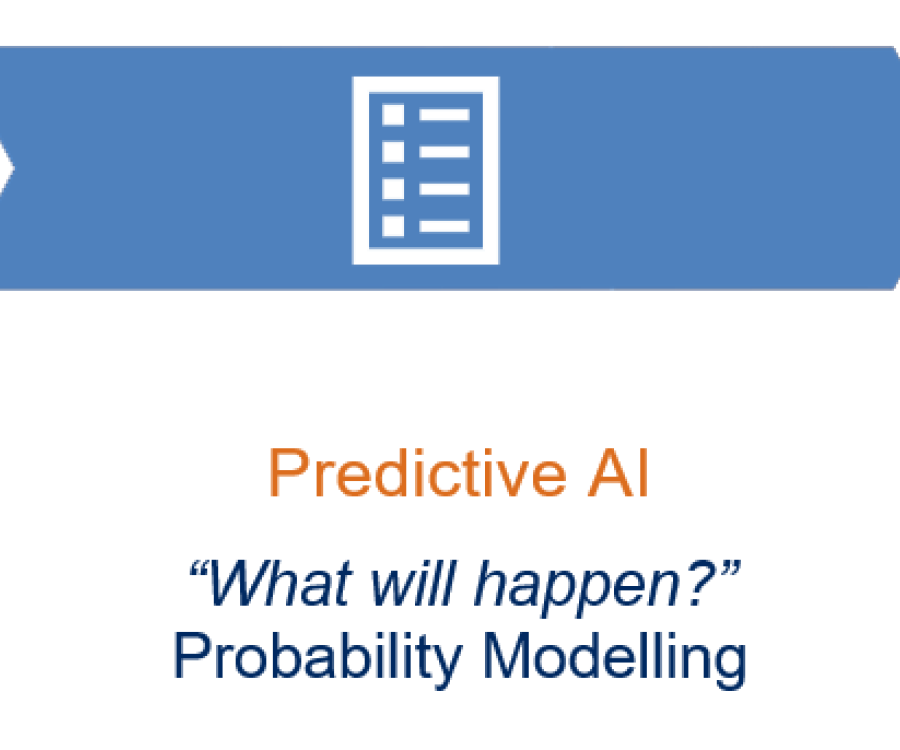
These tools cannot provide certainty. They offer guidance around probability, and that is precisely where the skill gap emerges. HR professionals trained in binary compliance thinking can struggle with outputs expressed as confidence intervals and likelihood estimates. The capability required is not advanced mathematics but interpretive literacy: understanding what an 80 per cent confidence prediction actually means, recognising the limitations of the underlying data and translating complex, conditional outputs into clear strategic recommendations.
When HR can do this well, the function’s value proposition transforms. The conversation with the executive team shifts from “here is what happened last quarter” to “here is what is likely to happen if we continue on this trajectory, and here is what it will cost if we do nothing.” This is business partnership at its most tangible. It is foresight, not hindsight.
The Path Forward: Deliberate, Structured and Learning
None of these competencies require HR professionals to become data scientists or software engineers. They do, however, require targeted, practical upskilling that extends beyond the AI awareness sessions dominating professional development calendars. Awareness does not build capability. It does not teach someone how to structure a prompt, audit an algorithm or interpret a probabilistic forecast.
The path forward begins with honest skills auditing at the individual and team level. Not “are we comfortable with technology?” but “can we technically govern the AI systems we already use or plan to deploy?” For most Australian HR teams, that audit will reveal gaps. Those gaps are not shameful. They are the predictable result of technological change that is outpacing education.
What comes next is deliberate, structured learning. Not generic overviews, but targeted development in prompt engineering for HR contexts, practical training in bias auditing methodologies and hands-on work with predictive analytics tools using real workforce data. This learning must be embedded into performance expectations, career pathways and professional recognition frameworks.
The Strategic Advantage of Technical Competence
The organisations that make this investment will gain measurable advantage. They will extract genuine value from their HR technology spend, mitigate legal and reputational risk more effectively and make better workforce decisions faster. Most significantly, they will have HR functions that command strategic influence through demonstrated technical competence, not just relationship capital.
Those that delay will find themselves increasingly vulnerable. Not because AI will replace their HR teams, but because their credentialed, experienced practitioners will lack the specific skills needed to govern, audit and exploit the systems their organisations have already purchased. The technology is here. The question is whether HR will master it or be mastered by it. The answer lies not in resistance or uncritical adoption, but in clear-eyed recognition of the technical literacy gap and systematic effort to close it. Australian HR has always adapted to regulatory change, technological disruption and shifting workforce expectations. This is simply the next evolution, and it is achievable for a profession already defined by rigour, judgment and commitment to getting complex things right.