
Payroll Complexity: Turning Complexity into Strategic Advantage
Payroll rarely attracts attention when it works. In most Australian organisations, it sits quietly in the background, expected to deliver accuracy, compliance, and consistency without interruption. Yet few functions operate under the same level of regulatory prescription, or touch as many parts of the business, as payroll does.
Globally, Australia is now ranked third for payroll complexity, with a 21% year-on-year increase according to Strada Global's 2025 Payroll Complexity Index (Strada Global 2025).
Award interpretations intersect with enterprise agreements.
Allowances and penalties depend on precise timing.
Superannuation, tax, and reporting obligations continue to evolve.
Single Touch Payroll Phase 2 has expanded visibility beyond the organisation.
None of this is unusual. It is the operating environment.
While complexity is widely acknowledged, its strategic potential is often underestimated. Payroll is one of the few functions that touches every employee and, every pay cycle, under some of the most prescriptive regulations in the Australian economy. When managed deliberately, it becomes one of the organisation's most reliable sources of truth, detailing how work is actually performed, what it costs, and where strategic trade-offs are in fact being made.
What is changing is how organisations respond. While some continue to view payroll complexity as an unavoidable administrative burden, others are beginning to recognise it as something else entirely:
a signal of organisational maturity,
a foundation for capability,
support for governance, growth, and trust.
The Rising Cost of Payroll Failure
As complexity increases, so does the cost of getting it wrong. Approximately 43% of Australian workers surveyed have experienced underpayment, whether deliberate or accidental (HCA Magazine 2024). Underpayment remains one of the most common compliance issues investigated by the Fair Work Ombudsman, particularly in award-reliant industries (Fair Work Ombudsman 2024). Enforcement activity and public reporting have heightened executive and board awareness of payroll risk.
For employees, payroll accuracy underpins trust. Payslips are tangible proof that obligations are being met. Errors, even when corrected, erode confidence and create friction that extends beyond the payroll function.
At an organisational level, payroll failures consume executive attention. Investigations, remediation programs, and regulatory engagement divert focus from growth and strategy. Complexity that is not well governed becomes noise at the top of the business.
Award Complexity as a Signal
But consider this. Award complexity signals workforce diversity and flexibility, not dysfunction. Multiple payment types demonstrate responsiveness to diverse workforce needs. System integration challenges reflect business maturity and scale. Stakeholder demands from HR, finance, operations and legal, represent sophisticated governance where multiple perspectives ensure accuracy.
When you stop fighting complexity and start working with it, the benefits extend well beyond compliance.
What Payroll Mastery Unlocks
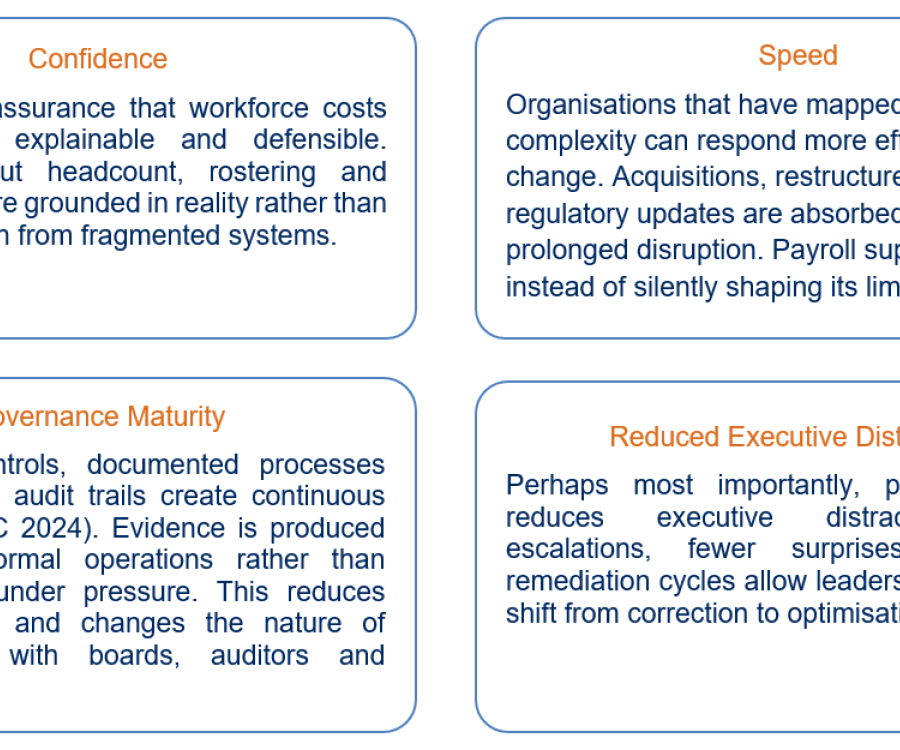
Research confirms these outcomes. Organisations that implement integrated payroll systems, report improved compliance outcomes and reduced manual processing time (HRM Online 2024). Companies that proactively address payroll complexity through systematic process improvement demonstrate stronger governance and reduced regulatory risk exposure (Australian Payroll Association 2024).
The distinction is not in industry or scale, but intent. Payroll is either treated as a cost of doing business, or as a capability worth investing in.
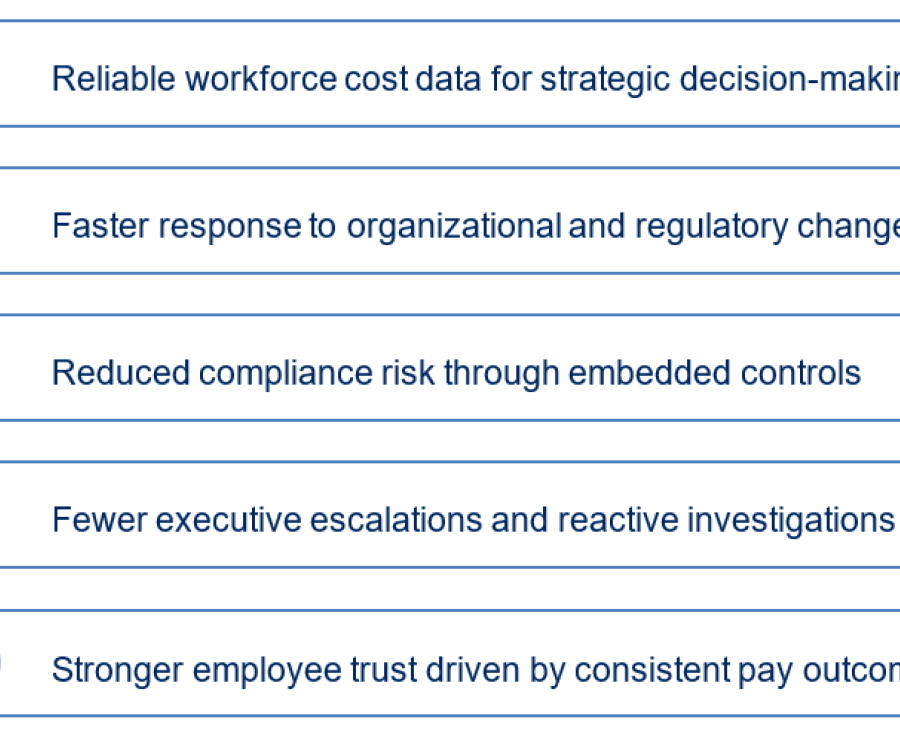
What Organisations Gain When Payroll Complexity is Mastered
Building the Capability
Mastery begins with clarity. Organisations must understand their payroll complexity as it truly exists, not as they wish it did. That means knowing exactly which payment types are processed, which awards apply, and what employment structures exist. It requires mapping every system touchpoint, every stakeholder interaction, every approval chain, and every manual workaround.
This exercise often uncovers hidden risks, such as knowledge that resides only in individual memory or processes that have never been formally documented. At the same time, it exposes opportunities where small adjustments can eliminate hours of manual work or where better system integration can prevent entire categories of errors.
Once clarity is achieved, the focus shifts to building repeatable processes that manage both routine payments and exceptions. Workflows should be standardised for consistency and efficiency, procedures documented to allow transferability and continuous improvement, and quality checkpoints established to catch issues before they escalate.
Exception protocols must be carefully designed to ensure that edge cases do not derail operations, maintaining both accuracy and resilience. Breaking down silos is equally essential. Payroll interacts with HR, finance, operations, legal, compliance and executive reporting. When these functions operate from different assumptions or disconnected data, complexity multiplies unnecessarily. Regular touchpoints, shared accountability, and a common understanding of what payroll enables for the business reduce friction, strengthen governance, and improve overall outcomes.
Technology and Expertise: The Foundation of Capability
Technology Deployed Thoughtfully
Technology plays a critical role, but only when deployed thoughtfully. Organisations should move away from fragmented point solutions and towards connected ecosystems that minimise manual data entry, improve data accuracy, and provide real-time visibility. Automated audit trails ensure compliance and allow regulators to be satisfied without requiring reconstruction of historical data. Platforms that scale appropriately, enable organisational growth rather than constraining it (HRM Online 2024).
Investment in Expertise
Finally, capability requires investment in expertise. Internal knowledge of Australian awards and industrial relations must be developed, maintained and supported by ongoing training as regulations evolve. Specialists should be engaged when complexity exceeds internal capacity, knowledge management systems should be established to ensure critical expertise does not leave with departing employees (Australian Payroll Association 2024).
Equally important is capacity: payroll teams operating at full utilisation have limited ability to analyse issues, test changes, or refine processes. True resilience requires space to think strategically, not simply process mechanically.
Looking Ahead
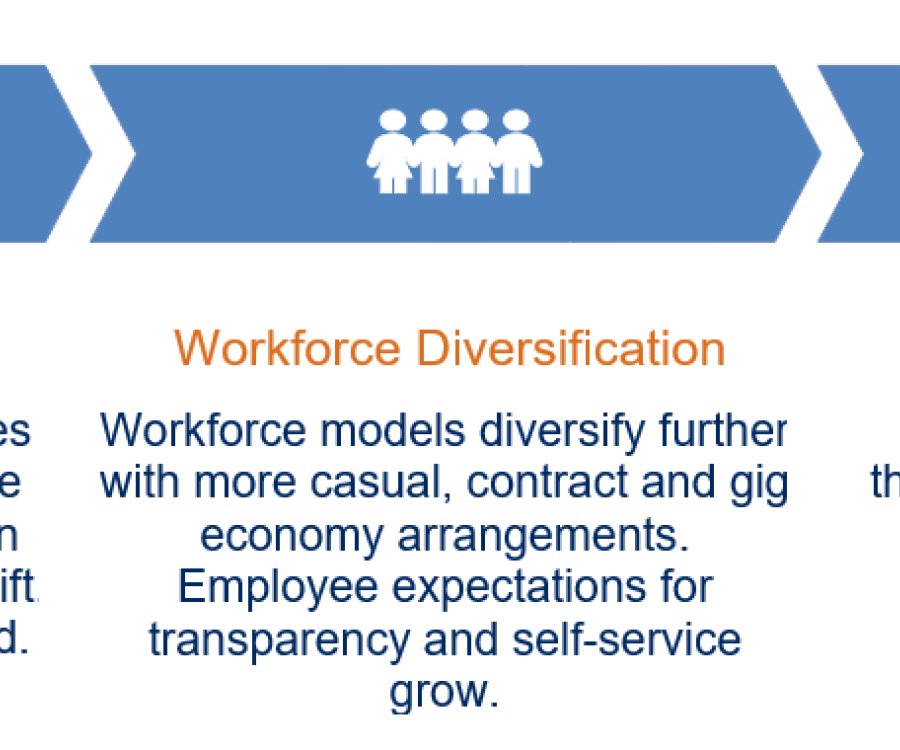
Payroll complexity in Australia is not easing. Regulatory evolution, workforce diversification, and heightened scrutiny are structural realities.
Organisations that are now investing in clarity, governance and capability are positioning themselves differently. They are building confidence where others manage uncertainty. They are turning compliance discipline into strategic advantage. They are turning compliance discipline into strategic advantage, and using it to make faster, clearer and more confident decisions about how their organisation actually really works.
The opportunity is not to eliminate complexity. That is not possible. The opportunity is to optimise it.
Payroll Maturity Quick Assessment

We can explain our payroll complexity to senior leadership in strategic terms
Our systems communicate with minimal manual data transfer
We have documented processes for both regular and exception payments
Our payroll team has capacity for strategic work, not just processing
We can generate workforce analytics from payroll data
We are confident in our compliance posture and audit-readiness
Our employees trust our payroll accuracy and have payment transparency