

Your Payroll Team is Exhausted and It Might Just Cost You Your Safe Harbour Protection
Ask any senior HR leader what the last few years have felt like and the answer is usually identical: escalating regulatory complexity, intense external scrutiny and static payroll headcounts. Modern award interpretation requirements have expanded, Single Touch Payroll (STP) reporting has evolved and compliance expectations have increased. Now, the transition to real-time superannuation tracking is reshaping the corporate operating environment entirely.
Yet many payroll functions still look remarkably similar to the legacy teams that existed before this regulatory wave hit. In many Australian organisations, payroll capability remains concentrated in small groups of specialists who carry deep institutional knowledge regarding local pay rules, enterprise agreement configurations and manual compliance overrides. When a key specialist leaves, takes extended leave, or simply reaches their capacity limits, the underlying business risk is rarely visible immediately. Instead, it accumulates quietly beneath the operational surface.
This capability-versus-demand mismatch is a familiar pattern across modern human resource management. The critical difference is that payroll errors now occur in an environment where regulators possess total data visibility, employees have zero tolerance for discrepancies and the financial penalties for non-compliance are severe.
The Operational Reality of the 7-Day SuperStream Rule
The true impact of Payday Super is not the increased frequency of payments; it is the total elimination of the operational recovery window. Under the modern regime, the metric that matters is no longer when the payment leaves the corporate bank account, but the exact date it is received and cleared by the employee's superannuation fund.
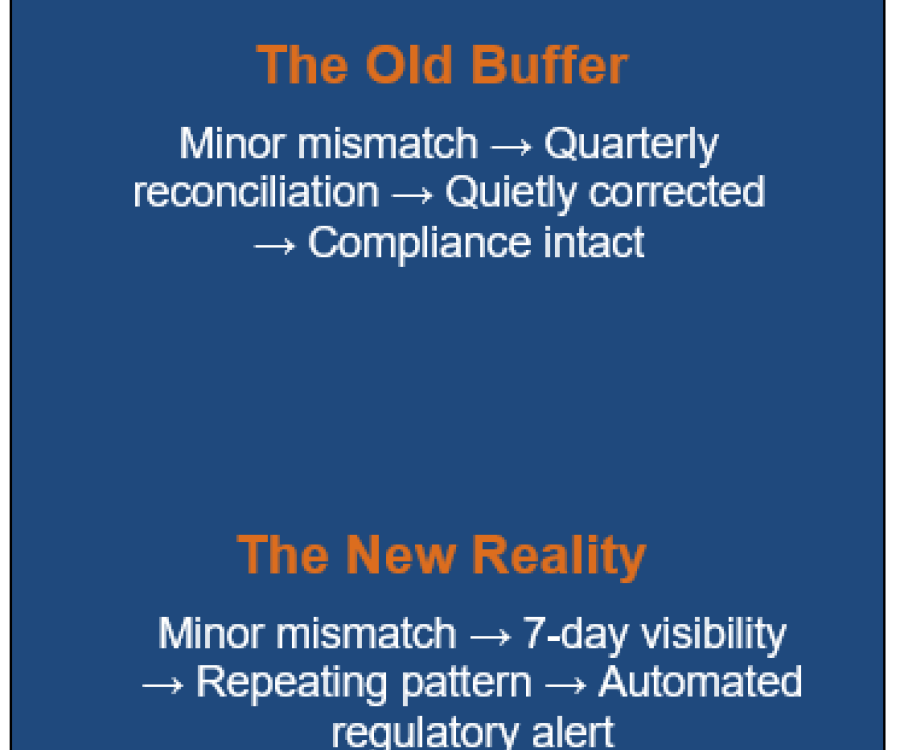
For years, lean payroll teams have survived on a degree of unspoken recovery time. A minor processing mismatch, a delayed clearing-house transfer, or a slight system misconfiguration could often be identified during end-of-month or quarterly reconciliations and corrected quietly before mutating into a technical breach. As of July 2026, that safety net has disappeared.
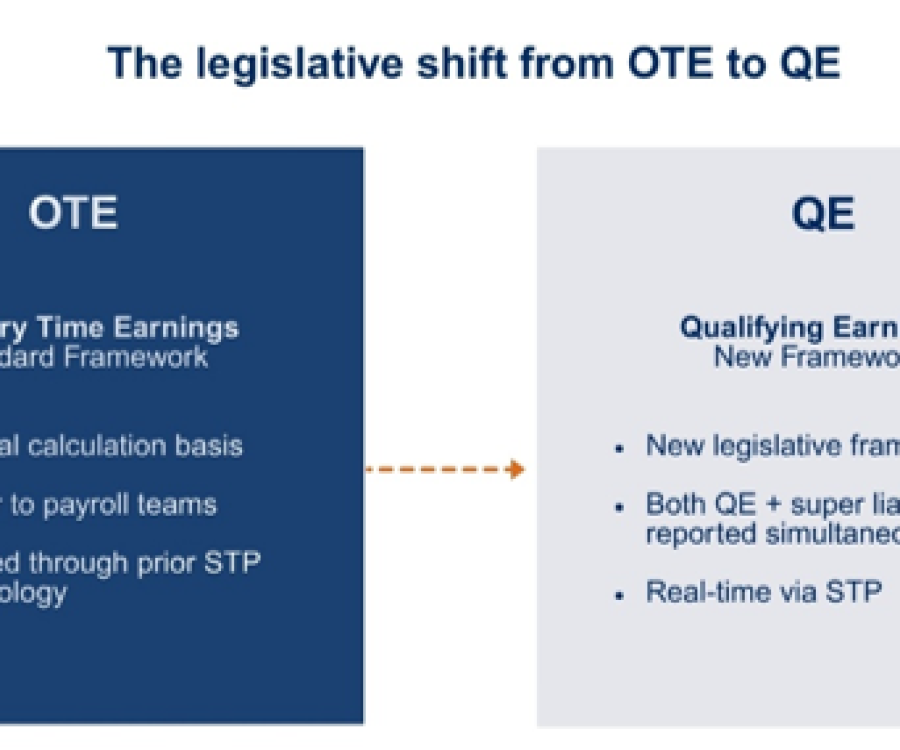
When compliance operated on a quarterly cycle, HR directors had a buffer to investigate anomalies, trace root causes and apply retrospective adjustments. Under a synchronised pay-cycle environment, that timeframe contracts to days. Furthermore, the legislative shift to the "Qualifying Earnings" (QE) framework replaces standard Ordinary Time Earnings (OTE), requiring teams to map and report both QE and super liability simultaneously via STP. Errors that were once caught during leisurely quarterly reviews will now repeat across consecutive pay cycles, triggering automatic alerts within regulatory reporting systems before internal teams even realise a glitch has occurred.
Understanding Safe Harbour Payroll Obligations for Directors
This acceleration does not merely complicate administrative operations - it changes the compliance risk profile for company executives. Under section 588GA of the Corporations Act 2001, company directors facing financial distress can access Safe Harbour protections, shielding them from personal liability for insolvent trading while they actively pursue a genuine turnaround strategy.
However, eligibility for Safe Harbour is strictly conditional. Directors must demonstrate that they are continuing to meet basic corporate obligations during the turnaround period and employee entitlement provisions form a non-negotiable part of this legal framework.
Scenario: The Intersection of Cash Flow Strain and Payroll Gaps
Consider a mid-sized Australian enterprise navigating a temporary liquidity downturn. Cash flow is severely constrained, resources are stretched thin and the lean payroll team is managing an increased manual workload due to a recent restructuring process.
Under the old quarterly framework, a minor calculation lag regarding superannuation contributions might be categorised as an administrative delay or a timing error during remediation. Under real-time rules, that delayed payment becomes an immediate, visible failure on the day of processing. Because the business is under financial strain, a pattern of consecutive delayed contributions emerges instantly within automated regulatory dashboards.
Imagine a system where clearing-house bottlenecks or unmatched member data cause payments to bounce outside the 7-day window. What began as a routine back-office capacity issue quickly escalates into a major governance crisis.
The persistent failure to meet superannuation deadlines on the day of pay can actively undermine the directors' ability to claim Safe Harbour protections, leaving the board personally exposed to insolvent trading liabilities.
The organisations most likely to require insolvency protections are, by definition, the exact same businesses operating under severe resource constraints. The uncomfortable reality for Australian boards is that an under-resourced payroll function can no longer be classified as a simple backend administration issue. It has become a core governance vulnerability.
Strategic Workforce Planning for Payroll Compliance Risks in Australia
To address this challenge effectively, CHROs must step away from traditional budget debates and view the issue through the lens of strategic workforce planning. Strip away the technical legal terminology and the problem reveals itself as a classic capability gap. While regulatory obligations have grown exponentially, internal team structures have remained largely unchanged.
Most forward-thinking organisations invest significant energy into forecasting future talent shortages, identifying leadership succession risks and mapping critical skill requirements across frontline operational divisions. Yet the internal administrative functions tasked with executing compliance safeguards, rarely receive the same analytical treatment.
Complexity accumulates incrementally. Operational knowledge becomes siloed within one or two senior personnel. Workloads expand through small, daily process additions until a sudden legislative shift, or an external audit uncovers an organisational capability gap that has been widening for years.
What HR Leaders Should Do Next: An Actionable Framework
The implementation of real-time superannuation processing serves as an ideal forcing function. It provides HR leaders with a clear, measurable timeline to audit and realign their payroll infrastructure with modern regulatory realities. To transition your team from a reactive administrative unit into a robust governance shield, prioritise the following immediate actions:
Conduct a Single-Point-of-Failure Audit: Formally document where payroll processing knowledge resides. If the integrity of your entire compliance framework relies on the institutional memory of one or two individuals, execute an immediate cross-training and documentation program.
Quantify the Complexity Workload: Measure the exact volume of manual workarounds, custom spreadsheet calculations and retroactive adjustments your team performs during an average pay run. Use this data to build an evidence-based business case for structural investment.
Establish Automated Variance Triggers: Implement automated reconciliation protocols that flag superannuation variances between your time-and-attendance software and your clearing-house submissions in real time, rather than waiting for end-of-month reporting.
Align Payroll Capacity with Board Risk Reporting: Educate the executive board on the direct connection between payroll processing capacity and director liability. Ensure that payroll health metrics are treated with the same strategic weight as health, safety and financial audits.
Ultimately, legislative transition should not be treated as a compliance deadline to merely survive. It is a clear signal that the domestic corporate environment is becoming less forgiving, regulatory transparency is increasing and tolerance for processing delays is now zero. The fundamental question is whether the human capability supporting your compliance systems has evolved at the same pace as the legislation. If this is not the case, then your vulnerability is already active.