

Who Sees the Error First? Building Payroll Resilience Under Payday Super
Payroll governance has traditionally been framed as a question of ownership. Does payroll sit with Finance, HR or a specialist team? Who signs off the pay run? Who is responsible when something goes wrong?
Those questions still matter. But Payday Super changes the more important question: who sees the problem first, who can understand it and who can act on it?
Since 1 July 2026, employers have been required to pay superannuation on payday, with contributions generally required to reach funds within seven business days. At the same time, the ATO has greater visibility of superannuation obligations through the connection between payroll reporting and superannuation payment data.
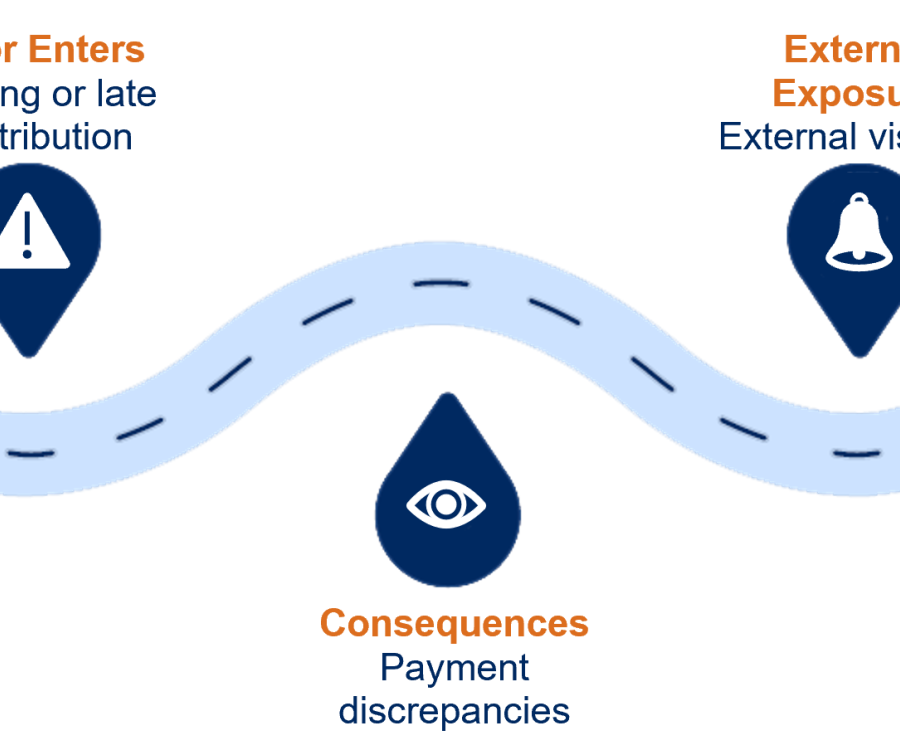
That changes the control environment. The time between an error entering the payroll process and its consequences becoming visible outside the organisation is shorter. The quality of payroll governance therefore depends increasingly on how quickly an organisation can see, understand and resolve an exception.
The HR Versus Finance Debate Was Built for a Slower World
The traditional ownership debate made sense when payroll operated with more time and more separation between processes.
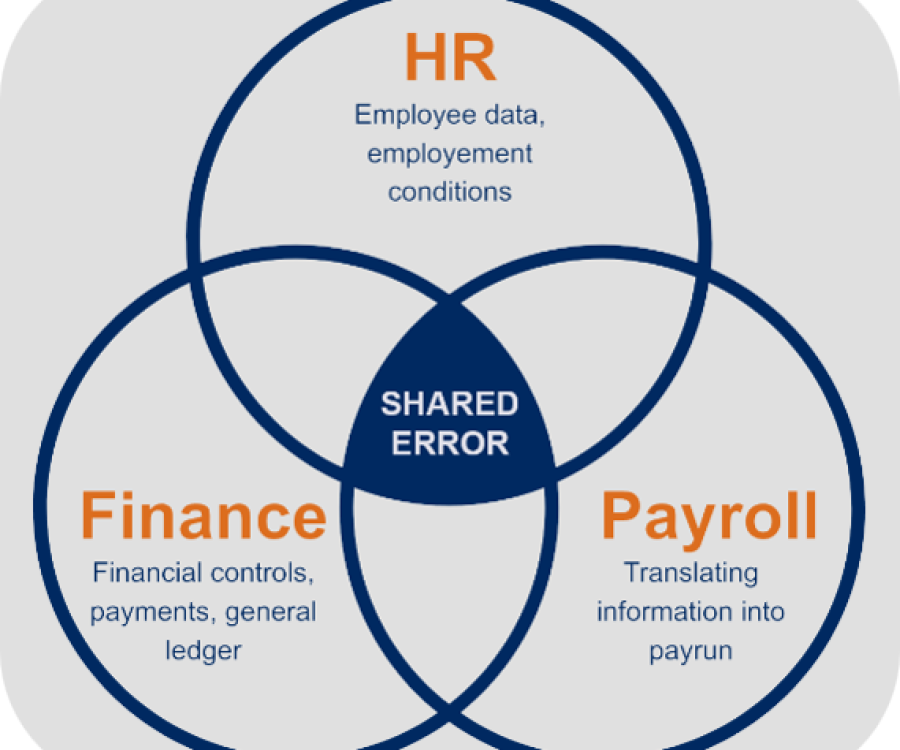
HR might own employee data and employment conditions. Finance might own financial controls, payments and the general ledger. Payroll would sit somewhere between the two, translating information from different sources into a pay run.
When something went wrong, there was often time to investigate. An incorrect allowance or change to an employee's conditions might not become a material issue until someone reviewed the results later.
HR, payroll and finance can therefore all have a legitimate connection to the same error. The question is no longer simply which function owns the process. It is whether the organisation has enough shared visibility to identify the error while there is still time to do something about it.
Visibility Is a Risk Control
Consider a payroll discrepancy that results from an incorrect employment condition.
HR may know that an employee's contract changed. Payroll may see that the resulting pay calculation looks unusual. Finance may see a variance in the payroll cost. The employee may notice something is wrong from their payslip. The superannuation fund may later receive a contribution that does not align with what was expected.
All these people can be looking at the same event while seeing different versions of the truth.
This is why visibility should be treated as a control in its own right.
Seeing an exception is not the same as understanding it. Understanding it is not the same as being able to correct it. And correcting it is not the same as being able to demonstrate what happened, when it happened and why.
Effective payroll governance needs all four.

See it
Seeing an exception

Understand it
Understanding what caused it

Correct it
Being able to correct it

Demonstrate it
Proving what happened, when and why
The Single Source of Truth Is Not Enough
“Single source of truth” has become a familiar technology phrase, but it can obscure the real governance challenge.
A system can hold current employee, payroll and financial information and still leave an organisation exposed if people do not know which information is authoritative, who can change it, how changes are authorised or how exceptions move through the process.
The real question is whether the organisation has a common view of critical data and clear accountability around it.
That means being able to answer four straightforward questions.
Who sees it first?
When an exception occurs, which person or team is most likely to identify it? Is that visibility built into the payroll process, or does it depend on a later report, reconciliation or employee query?
Who can understand it?
Once an anomaly is detected, can the person seeing it determine what caused it? Or does investigation require several teams to reconcile different data sets before anyone can act?
Are we working from the same information?
If HR, payroll and finance investigate the same issue, are they using the same employee, earnings and payment information? If not, how much time is spent establishing which version is correct?
Can we prove what happened?
Can the organisation trace the issue from its original source through detection, investigation, correction and payment? A strong control environment needs evidence, not just confidence that an issue was dealt with.
Four Practical Tests for Payroll Governance
Turn these questions into a practical governance exercise. Rather than reviewing payroll ownership in the abstract, test the process against what actually happens when something goes wrong.
Measure time to detection and resolution
Take several recent payroll or superannuation exceptions and map what happened. When did the underlying error enter the process? When did someone first become aware of it? When was the cause understood? When was the correction completed?
The gaps between those points are more revealing than a policy document. If material exceptions routinely take days or weeks to surface or resolve, the organisation may have too little room to respond under a tighter payment cadence.
Map accountability for critical payroll data
Identify the data elements that can materially affect pay or superannuation, then establish who is accountable for their accuracy, who can change them and how those changes are authorised.
This is particularly important where information moves between HR, payroll, rostering and finance. Responsibility should be clear at the point where a change enters the payroll process, rather than becoming a matter of debate after an error occurs.
Test the exception path
Choose a real exception and follow it from detection to resolution.
Who received the first alert? Who investigated it? Where did information have to be reconciled? Were there handoffs between teams? Did anyone have to wait for a report, meeting or another pay cycle before the issue could be resolved?
This exercise often reveals weaknesses invisible in process maps. A process can appear well controlled until an exception has to travel through it.
Model the cost of delayed visibility
Use actual payroll or superannuation exceptions to consider what would happen if they were identified later.
The impact may include additional correction work, employee queries, payment adjustments and potential superannuation obligations, as well as the time required to establish what happened. The purpose is to demonstrate the operational and financial impact of delayed visibility.
This gives payroll leaders a stronger basis for discussing investment in data quality, integration, controls and exception management. The conversation moves from technology preference to measurable risk.
The New Strategic Question for Payroll Leaders
Payday Super has not made the question of payroll ownership irrelevant. It has made it less useful as the starting point for governance.
Payroll still needs clear accountability. HR, finance and other functions still have defined responsibilities. What changes is the importance of the connections between them.
The strongest payroll environments will be those where the right people can see the same information, identify exceptions early, understand their cause and act without unnecessary handoffs. They will also be able to demonstrate what happened when something does go wrong.
That is a more demanding standard than simply having a payroll process, a reconciliation or a sign-off.
The strategic question is therefore simple:
If the answer is unclear, payroll governance may have an ownership problem. More importantly, it may have a visibility problem.
And under Payday Super, visibility is becoming one of the most important controls payroll leaders have.