

Payroll Leadership Has Changed. The Job Description Hasn’t
There was a time when the definition of payroll leadership was straightforward. Run the payroll accurately. Understand the legislation. Navigate the complexities of awards and agreements. Manage the inevitable exceptions. Keep the wheels turning. Primarily, make sure people were paid correctly and on time.
Operational excellence was the benchmark. And, in truth, it still is. But something has shifted.
Increasingly, payroll leaders are finding themselves in conversations that extend far beyond the payroll function. They're expected to explain compliance exposure to executive teams, provide assurance around governance frameworks, contribute insights into workforce costs, support transformation initiatives and articulate how risks are being identified and managed.
The payroll still has to be run. But the expectations surrounding those responsible for it have expanded considerably. The question is whether organisations have recognised just how significant that shift has become.
Operational Excellence Was Never the Problem
There is a tendency to talk about payroll as though it has suddenly become complex. Anyone working in the profession knows that's simply not true.
Payroll has always existed at the intersection of legislation, industrial instruments, organisational policy, systems capability and human behaviour. It has always required precision, judgement and resilience. What has changed is the visibility of the function.
Underpayment events have heightened executive awareness. Governance expectations have increased. Boards and leadership teams are asking more questions, and rightly so. The consequences of getting payroll wrong extend well beyond operational disruption. They can affect employee trust, organisational reputation and financial performance, not to mention personal liabilities for senior executives.
In response, many organisations have expanded what they expect from payroll leaders. The challenge is that these new expectations have been layered onto existing responsibilities rather than replacing them.
The Market Is Already Signalling a Shift
The Australian Payroll Association's 2026 Payroll Industry Report offers compelling evidence that the market increasingly views payroll leadership through a broader lens.
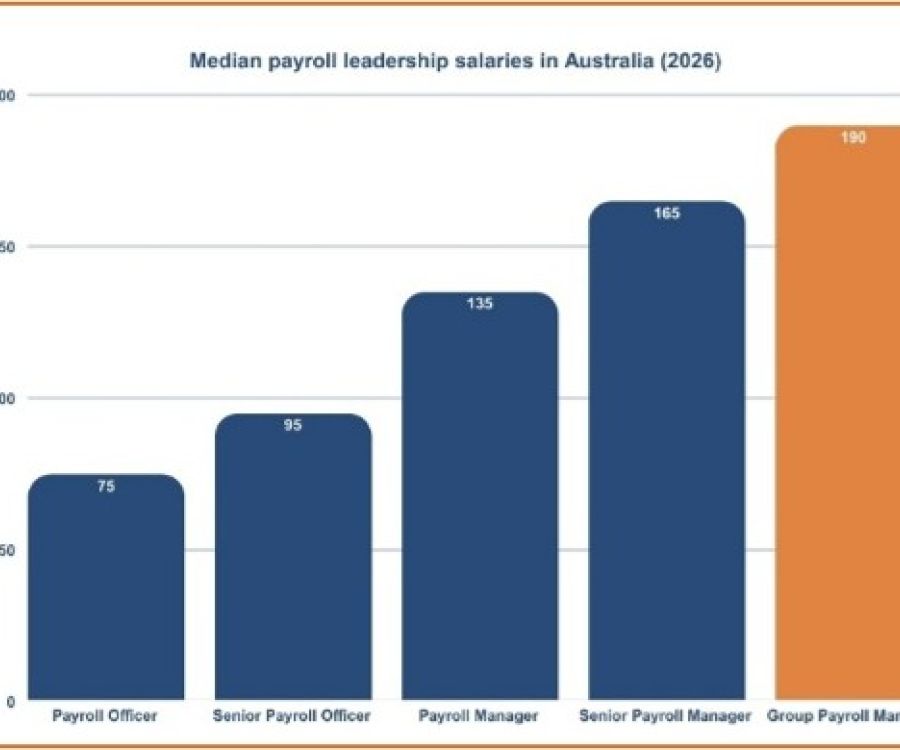
Group Payroll Manager roles now command median salaries exceeding $190,000, reflecting a growing demand for leaders capable of managing legislative complexity, technology transformation and governance risk. But remuneration alone does not explain the shift. Across organisations, payroll is no longer assessed purely on whether it runs efficiently. Increasingly, it is judged on whether it can be shown, explained and defended.
Boards and executive teams are seeking clearer visibility into payroll risk, supported by data that can withstand scrutiny and inform decision-making. At the same time, confidence remains uneven, with many organisations not fully certain they are paying employees correctly despite existing systems and controls.
The implications extend beyond the payroll function itself.
Compliance ownership is expanding across HR, finance and executive leadership, reflecting the reality that payroll outcomes are shaped by decisions made across multiple parts of the organisation.
The implication is difficult to ignore.
The profession isn't merely becoming more technical, it is becoming more accountable, more visible and more exposed to scrutiny.
The Resilience Challenge Nobody Talks About
One aspect of this transition receives far less attention than it deserves. Emotional resilience.
Payroll professionals have long operated under pressure. Deadlines are fixed. Errors affect people's livelihoods. Legislative changes land with little regard for operational capacity.
But resilience in payroll leadership is evolving. Historically, resilience often meant coping with volume, complexity and competing priorities. Today, it increasingly means navigating scrutiny.
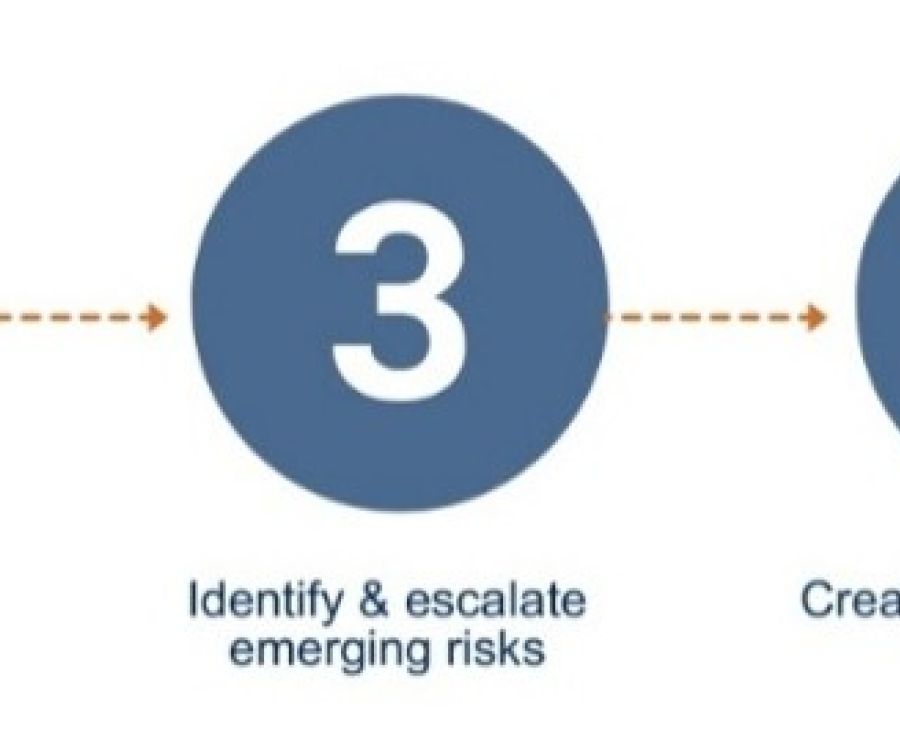
Leaders are expected to provide certainty in environments characterised by ambiguity. They must communicate confidently with executives while managing the understandable concerns of their teams. They are asked to identify and escalate emerging risks, often within cultures that have historically rewarded perfection.
That last point matters. In highly visible environments, there is often a tendency to avoid exposing issues until they are fully understood or resolved. Yet mature governance depends on the opposite approach. It requires organisations to identify concerns early, investigate them thoroughly and respond transparently.
Transparency does more than reduce risk - it creates visibility. And visibility drives action. Organisations cannot invest appropriately in systems, controls, capability or process redesign, if they lack a clear understanding of where vulnerabilities exist. The payroll functions that are best positioned to secure funding, influence decision-makers and drive meaningful change, are often those able to articulate risks clearly, quantify their impact and demonstrate how investment supports stronger governance outcomes.
This demands a different kind of leadership capability. The payroll leaders who thrive in the years ahead, may not necessarily be those who encounter the fewest problems. They may be those who create environments where issues surface sooner, conversations occur more openly and teams feel psychologically safe enough to raise concerns before they escalate.
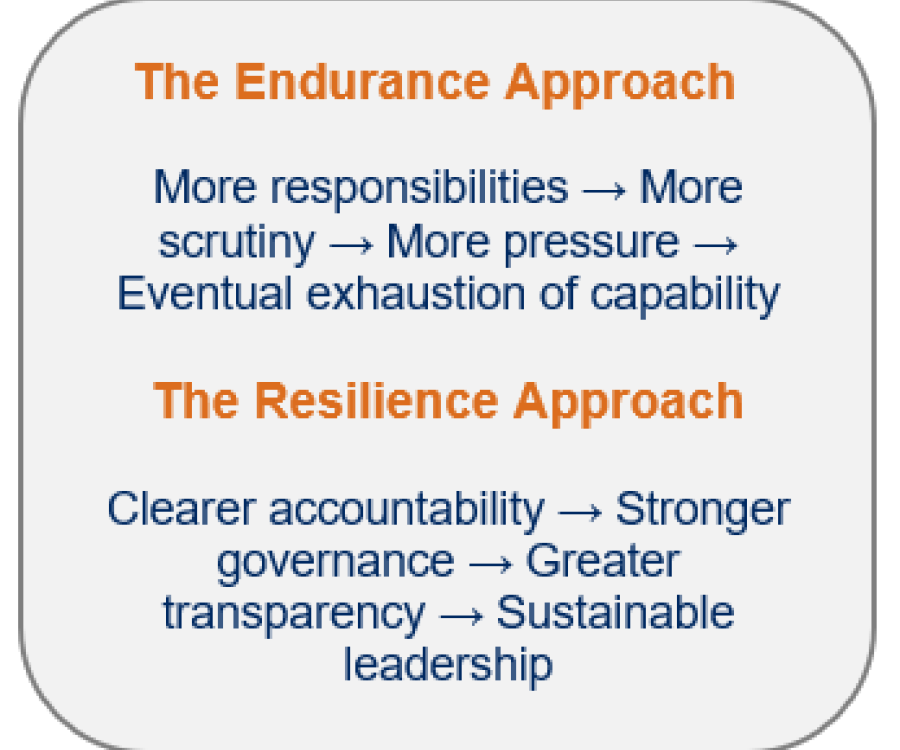
That takes courage. And organisational support. Resilience should not be viewed simply as an individual's capacity to absorb ever-increasing demands. Organisations must consider whether their structures, expectations and resources enable sustainable leadership. Because there is a difference between resilience and endurance. One builds capability. The other eventually exhausts it.
Is One Role Becoming Two?
This raises an uncomfortable but increasingly important question. Have expectations expanded to the point where organisations need to rethink how payroll leadership is structured?
Some organisations continue to broaden existing leadership roles, expecting individuals to move seamlessly between operational delivery, executive engagement, compliance oversight and transformation initiatives.
The same shift influences how organisations think about outsourcing. Increasingly, businesses recognise that while aspects of payroll processing may be delivered through external partners, accountability for governance, risk oversight and executive assurance remains firmly within the organisation. Outsourcing may redistribute activities, but it does not eliminate leadership responsibility.
In practice, some organisations are already distinguishing between these responsibilities, recognising that governance oversight and operational leadership require different but complementary skill sets. In larger and more complex organisations, dedicated payroll compliance, governance and transformation roles are increasingly emerging alongside traditional operational leadership positions. While there is no single blueprint, the trend suggests some organisations have concluded that the growing breadth of accountability can no longer sit comfortably within a single role.
Neither approach is inherently right or wrong. Organisations vary in size, complexity and risk profile. However, the very existence of these emerging models suggests the profession may be entering a period of experimentation. It is no longer enough to assume that because payroll leaders have always adapted, they can simply continue absorbing added responsibilities indefinitely. Eventually, organisations must ask whether the role itself remains fit for purpose.
The Conversation We Need to Have
Payroll professionals have spent decades managing extraordinary complexity with remarkable professionalism. That doesn't mean the profession is unprepared for what comes next. Nor is it a suggestion that traditional capabilities have somehow diminished in importance. Technical excellence remains fundamental. As does operational discipline.
Payroll still has to process, but we must question whether payroll leaders are capable of meeting new expectations and whether organisations have fully recognised how profoundly these expectations have changed.
If payroll leaders are now expected to be operational experts, governance specialists, communicators, strategists and transformation partners, simultaneously, organisations have a responsibility to examine whether the roles, structures and support systems surrounding them, have evolved accordingly.
The future of payroll leadership may not depend solely on developing different leaders.
It may depend on designing different environments in which those leaders can succeed, environments characterised by clearer accountability, stronger governance, greater transparency and leadership structures that reflect the realities of modern payroll operations.