

Payroll Accuracy Begins Outside of Payroll: Why Australian Businesses Need a Smarter Approach to HCM Data
Most organisations do not set out to create payroll risk. Yet many continue to rely on disconnected HR, rostering, time and payroll systems that only function because people constantly intervene to keep them aligned. For years, the case for integration focused on efficiency. Fewer manual processes, less duplicate data and smoother workflows were compelling benefits. Today, the stakes are much higher.
In Australia's evolving compliance environment, fragmented workforce systems create a fundamental problem. They make it difficult to trust the data that payroll depends on. The pay run may reveal an error, but it rarely creates it.
Payroll is where the outcome becomes visible. The real challenge often begins much earlier, across a chain of workforce decisions, approvals and data transfers. Organisations that want to improve payroll accuracy need to focus on the entire journey of workforce data, from rostering through to payment.
The Myth of the Payroll Error
Many organisations still treat payroll risk as a payroll problem. When an error occurs, attention immediately turns to the payroll team. Yet payroll can only process the information it receives.
In reality, most payroll issues originate upstream. A roster may not align with award conditions. A manager may approve an exception without understanding the implications. Time data may pass between systems without adequate validation. By the time payroll receives the information, the conditions for an error may already exist.
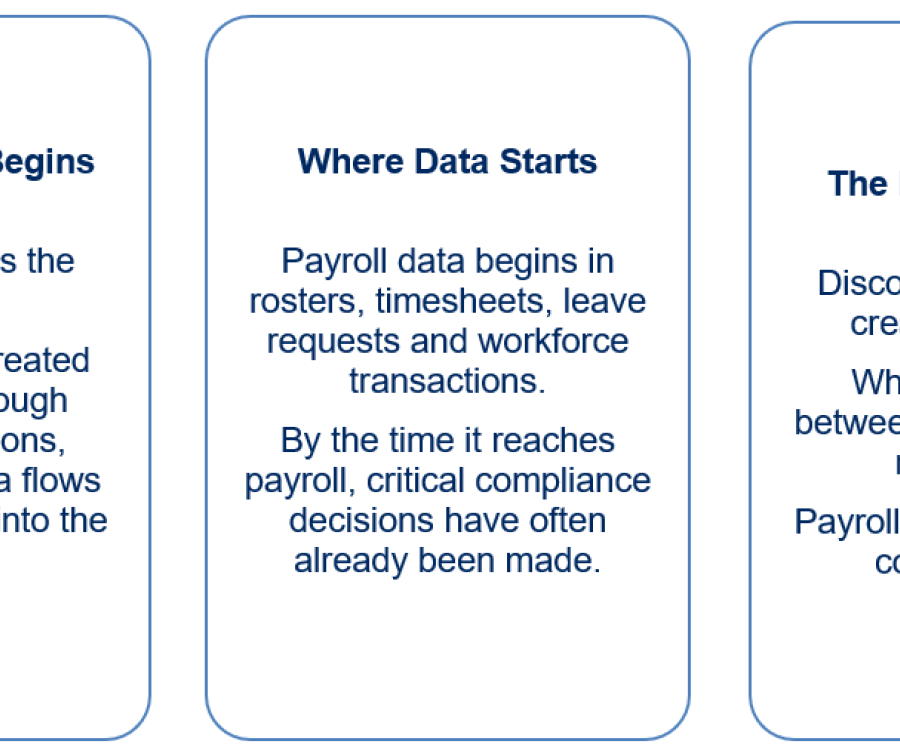
Improving payroll outcomes requires more than stronger payroll controls. It requires confidence in every process that contributes to the final result.
Compliance as a Real Time Control Environment
The Fair Work Legislation Amendment reforms have changed the compliance landscape. With wage theft now carrying serious legal consequences, organisations have less room than ever for manual workarounds and process gaps.
Recent underpayment cases show a common pattern. The issue is rarely a single mistake. More often, it is the cumulative effect of disconnected systems, inconsistent rules and poor visibility.
Integrated HCM platforms help shift compliance from detection to prevention. When rostering, time capture and payroll operate from the same rules, risks can be identified as work happens. Overtime triggers, penalty rates and award conditions become visible before they become payroll problems. Instead of relying on retrospective audits, organisations gain the ability to manage compliance in real time. The result is stronger governance, greater confidence and fewer surprises.
Why Fragmented Analytics Fail the Boardroom
Workforce analytics has become a strategic priority, but many organisations still struggle to trust their own numbers. The problem is not a lack of reporting. It is a lack of consistency. When payroll, HR and time systems operate from different definitions and data sets, every report becomes open to challenge. HR presents one view. Finance presents another. Operations questions both. Valuable time is spent reconciling information instead of acting on it.
Integrated systems provide a clear chain of evidence from workforce activity through to labour cost. Leaders gain confidence that workforce metrics reflect operational reality, not a collection of disconnected data sources. Good analytics should drive decisions. It should not trigger debates about whose numbers are correct.
The Commercial Reality of Manual Intervention
The cost of disconnected systems is often hidden in everyday activities. Manual reconciliations. Spreadsheet corrections. Duplicate data entry. Last-minute checks before payroll closes. Individually, these tasks seem minor. Together, they consume significant time and create avoidable risk.
Poor visibility also affects commercial performance. Labour costs can drift well before leaders become aware of the problem. Overtime accumulates. Penalty rates increase. Budgets begin to move off course.
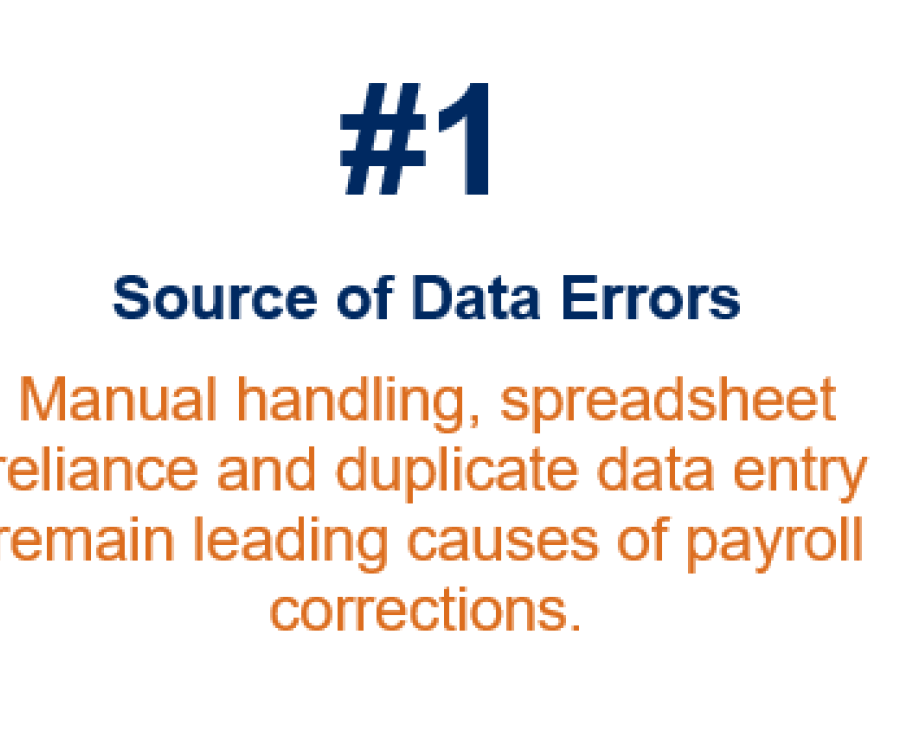
Integrated workforce systems provide timely visibility into labour spend and workforce activity. Leaders can identify issues earlier and make informed decisions while there is still time to influence the outcome.
The Human Cost of Workaround Fatigue
System fragmentation affects more than compliance and productivity. It affects people.
Across HR and payroll teams, experienced professionals spend countless hours managing exceptions, fixing data issues and moving information between systems. Work that should be strategic becomes administrative. Over time, this creates frustration, fatigue and disengagement.
Trapped in the Admin Trenches
Exporting and importing data between systems
Chasing missing timesheets
Reconciling spreadsheets before payroll
Verifying leave balances manually
Correcting avoidable data errors
Unleashing Strategic Impact
Strengthening governance
Interpreting legislation
Supporting business leaders
Improving workforce planning
Delivering strategic workforce insights
Highly skilled payroll and HR professionals deliver the greatest value when they focus on governance, workforce planning, legislative interpretation and business improvement. Yet many remain trapped in repetitive operational tasks that technology should already be handling.
Integration is not simply a technology investment. It is an investment in capability.
Assessing the Architecture of Accountability
As workforce complexity increases, organisations need to ask a simple question. Can their systems withstand scrutiny?
If a regulator requested evidence showing how a shift worked in July flowed through to a payslip in August, how quickly could that information be produced?
Would the answer involve a single source of truth or a trail of spreadsheets, exports and manual reconciliation?
A modern workforce platform should provide a clear and traceable audit trail from start to finish. Every workforce event should be connected, visible and easily verified.
True integration is not about software alone. It is about creating accountability through data. It ensures decisions made on the frontline remain connected to the governance frameworks that support the organisation. For Australian businesses, this capability is no longer a future aspiration. It is rapidly becoming a prerequisite for sustainable growth, strong governance and ongoing compliance.
Conclusion
Payroll accuracy is not created during payroll processing. It is created through every workforce transaction that comes before it.
Organisations that continue to rely on disconnected systems expose themselves to unnecessary compliance, financial and operational risk. Those that create a connected workforce ecosystem gain something far more valuable than efficiency. They gain confidence in their data, stronger governance and greater control over workforce outcomes.
The question is no longer whether integration delivers value. The question is whether organisations can afford the risk of operating without it.