

From Data to Decisions: How HR Can Earn Strategic Authority
A workforce analytics report is presented to the executive team. The data is robust, the dashboard is well constructed and the interpretation appears sound. There may be a nod of acknowledgement, perhaps a question or two. Then the conversation moves on to financial performance, cost pressures or strategic risk. The HR analytics report is not criticised. It is simply not used.
This pattern is not anecdotal. It reflects how HR analytics is often viewed by senior leaders. Technology and data quality are often blamed. But they are not the real barrier. HR analytics struggles because it lacks authority. It has a credibility and framing issue.
The Persistent Gap Between Data and Decisions
Investment in HR analytics across Australia has accelerated in recent years. Organisations have upgraded HR systems, expanded reporting and begun using analytics to improve workforce insight. On the surface, this suggests a function moving steadily toward strategic relevance. The outcomes, however, do not consistently reflect that progress.
The Australian HR Institute reports that 43 per cent of Australian organisations do not have a strategic workforce plan, despite operating in an environment of ongoing skills disruption and structural change. This highlights a clear gap between available workforce data and executive decision-making.
Similar challenges have been identified in the public sector. The Australian Public Service Commission established its HR Data and Analytics Project to address inconsistent definitions, variable data quality and capability gaps that undermine senior leaders’ confidence in workforce analytics.
Global analyst research reflects a similar pattern. Gartner has found that many organisations investing in AI for HR are struggling to demonstrate meaningful business value, noting that AI in HR is entering a period where expectations exceed realised outcomes. While technology has increased the volume and speed of analysis, it has not increased influence.
Why HR Analytics Fails to Influence Executive Decision Making
In practical terms, HR analytics fails to influence decisions when it does not clearly inform a decision. Executives are rarely seeking more data. They are seeking clarity on risk, trade offs and consequences. When analytics only describes past events and does not recommend next steps, it becomes informational rather than actionable. Executives may acknowledge the analysis, but without guidance, it is often set aside.
Why More Data Does Not Solve the Problem
When HR analytics does not achieve buy-in from senior management, the instinctive response is to improve the data. Organisations invest in additional tools, refine models, or expand reporting outputs. While these steps may improve accuracy, they do not necessarily improve influence.
Executives are not constrained by a lack of information. They are constrained by a lack of clarity.
For an insight to influence a decision, it must address specific questions.
What decision is being informed?
What are the consequences of action or inaction?
What assumptions underpin the analysis?
What level of confidence should be placed in the findings?
Much of what is labelled as HR analytics remains descriptive, explaining what has happened and sometimes why. But it fails to advise on next steps. Without direction, even sound analysis has limited impact at executive level.
Analytics should reduce uncertainty for the decision maker. This requires an understanding of how workforce data relates to the organisation’s strategy, risks and operating realities. When HR focuses solely on the “what” of the data, it misses the opportunity to guide the “so what” and the “now what.”
The Credibility Challenge in HR Analytics
The influence of HR analytics is closely tied to how it is perceived by decision makers. In functions such as finance, analytical outputs operate within established governance frameworks. Assumptions are explicit, methodologies are understood and accountability is clear. This creates trust, even where forecasts involve uncertainty.
HR analytics does not always operate with the same discipline. Variation in definitions remains a common issue. Measures such as turnover, workforce cost or absenteeism are often calculated differently across organisations and sometimes within them. Without consistency, executives struggle to rely on outputs.
The Australian Public Service Commission has addressed this directly by developing an HR Data Dictionary that standardises definitions across more than 100 workforce metrics. This initiative underscores an important principle. HR analytics credibility depends on shared meaning as much as analytical sophistication.
Governance As a Foundation for Trust in HR Analytics
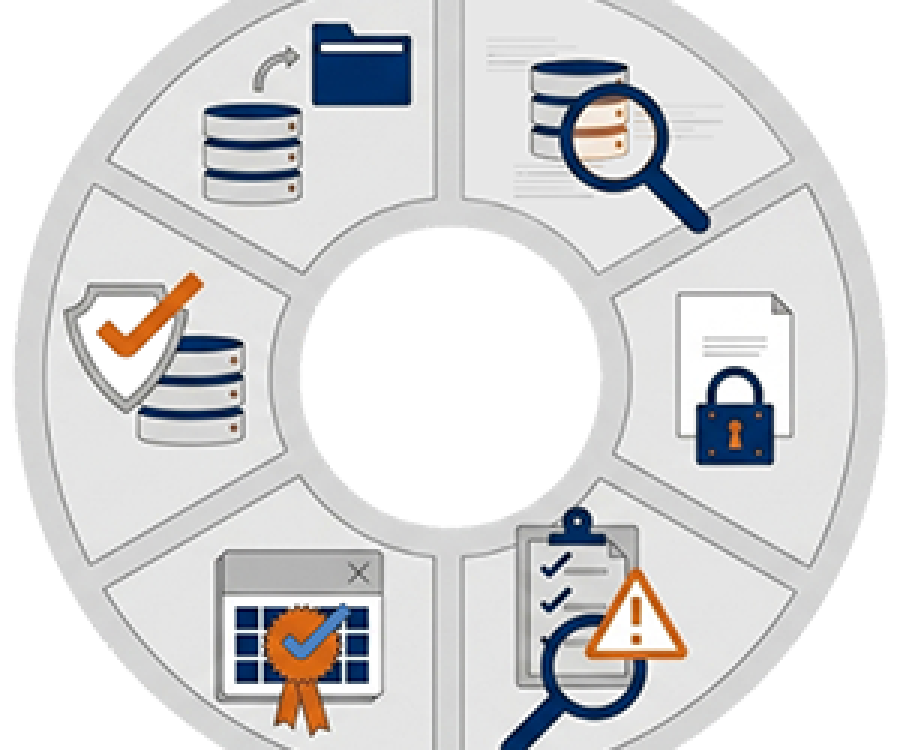
Transparency is central to the credibility of HR analytics. Executives need to understand not only what the data shows, but how it was constructed. Where assumptions are unclear or methodologies are opaque, even well founded insights are easily discounted.
Governance provides the structure that supports this transparency. By setting clear standards for data use, testing assumptions and assigning accountability, governance enables workforce analytics to be scrutinised in the same way as financial analysis. Without this discipline, HR insights are often treated as supplementary rather than decision critical.
This creates a reinforcing cycle. Limited governance reduces trust, reduced trust limits use and limited use weakens accountability. Breaking this cycle requires HR analytics to be positioned as a core decision input, supported by consistent standards and clear ownership.
Reframing Workforce Analytics as Organisational Risk
One of the most effective ways to strengthen the influence of HR analytics, is to frame workforce insight as organisational risk. Executive teams are accustomed to prioritising issues through a risk lens. Financial viability, operational continuity and strategic execution are all assessed in this way. Workforce capability underpins each of these areas.
When workforce data is positioned as an HR issue, it can appear peripheral. When it is framed as a risk to execution or performance, its relevance becomes immediate.
From Reporting to Decision Briefing in Executive Decision Making
Influence requires a shift from reporting to decision briefing. Executives engage most when insight is selective, relevant and centred on a clear choice.
That requires fewer metrics, clearer links to decisions and a more explicit treatment of uncertainty. Single point forecasts can create false confidence in complex workforce environments.
Capability and the Future Role of HR
The transition from data provider to decision influencer requires new capability. The Australian Public Service Commission is aiming to have HR professionals as trusted business advisors, rather than functional specialists.
Data literacy remains important, but it is not sufficient. HR professionals must understand how executives evaluate risk, weigh trade offs and make decisions under uncertainty. Commercial acumen and the ability to link workforce decisions to organisational performance are essential.
Communication is equally critical. Insights must be clear, concise and directly relevant. Authority in HR analytics comes from applying sound judgement to data, not simply demonstrating technical proficiency.
HR analytics influence on decision making is built through consistent use. It develops when insights are trusted, governed and aligned to organisational priorities. Authority is not granted by better dashboards. It is earned through disciplined contribution to executive decisions over time.