
AI in HR: From Hype to Operational Value
Executive Summary
On a Monday morning, a HR leader opens their inbox to three familiar emails: a payroll query flagged as “urgent”; a manager asking why rosters have blown out again; and an employee frustrated by how long it takes to get a simple leave question answered. None of these problems are new however expectations around how quickly and accurately they should be resolved, have certainly changed.
AI is no longer an emerging concept in HR. It is increasingly embedded in the day to day reality of HR, payroll and workforce management. Yet many organisations are still struggling to translate AI investment into outcomes that reduce pressure on HR teams, improve trust with employees and stand up to scrutiny from finance, security and the board.
The Shift from Adoption to Accountability
Over the past two years, AI in HR has moved quickly from “interesting” to “inevitable”. Many organisations can now point to at least one AI enabled capability, often bundled into an existing HR or payroll system, even if they are not actively using it.
What has changed is the level of scrutiny. HR leaders are no longer being asked whether they are exploring AI, but whether it is making a measurable difference.
Consider a typical scenario: an organisation invests in a new AI enabled HR platform, expecting faster insights and better decision making. Six months later, the technology is live, but payroll errors are still being corrected after the fact, workforce costs are rising faster than expected, and HR teams are still fielding the same volume of routine queries. Adoption has occurred, but the impact has not.
Findings from the Sapient Insights Group 2025–2026 HR Systems Survey reflect this reality. While AI investment has shifted into core HR budgets, many organisations remain unaware of the AI capabilities already embedded in their HR and payroll platforms. Where AI is integrated directly into operational workflows, organisations are significantly more likely to report improved HR, talent and business outcomes.
The lesson is clear: AI delivers value when it is anchored in everyday work, not when it sits alongside it.
From Automation to Operational Intelligence
Historically, HR technology focused on digitisation replacing out-dated options with systems that reduced manual effort. AI is changing the equation by adding interpretation, pattern recognition and early warning signals.
But the most effective applications are rarely headline grabbing. They are practical.
Take payroll, for example. Rather than replacing payroll professionals, AI is increasingly used to scan large volumes of payroll data to identify anomalies before pay is finalised. Instead of discovering an issue after employees have been paid and damaging trust, payroll teams are alerted early and remain in control of the process.
In highly regulated Australian environments, this distinction matters. AI that attempts to automate complex human decisions, such as performance assessment or hiring outcomes, raises ethical and governance challenges.
AI that strengthens accuracy, consistency and insight in established workflows has proven far more effective.
Leading organisations treat AI as an operational intelligence layer supporting people with better information and faster validation rather than as a decision maker in its own right.
Where AI Is Delivering Measurable Value Today
Employee service delivery
Employees no longer differentiate between “simple” and “complex” HR questions - they simply expect answers.
AI supported self service enables employees and managers to resolve routine queries about leave, pay and personal details in real time, without waiting for HR intervention. For HR teams, this reduces administrative load. For employees, it removes friction.
Example in action
Solutions such as chatHR, Frontier Software’s AI powered HR self service capability, demonstrate how conversational interfaces embedded in core HR and payroll, can deliver immediate value. By drawing on authoritative data sources and existing security profiles, chatHR improves accessibility without compromising governance or compliance.
Payroll Accuracy and Compliance
Payroll is often the arena where HR credibility is visibly tested. One incorrect pay can undo months of employee goodwill.
AI enabled validation and anomaly detection allow payroll teams to identify issues such as:

For organisations operating in complex award environments, operational reliability underpins compliance while enabling strategic advantage.
Workforce Planning and Rostering
Workforce costs represent one of the largest and least flexible expense categories for most organisations. Despite this, rostering decisions are often made reactively, with limited visibility of emerging cost pressures or demand shifts.
AI-driven workforce analytics enables organisations to proactively analyse attendance patterns, forecast demand fluctuations and apply working time regulations with precision. By identifying inefficiencies early, organisations can reduce overtime, optimise staffing levels and maintain service standards.
For HR and operations leaders, the impact is measurable and immediate. Workforce management initiatives consistently deliver strong returns on AI investment because the outcomes are directly reflected in operational schedules, payroll expenses and overall financial performance.
Workforce Analytics and Decision Support
Strategic workforce insight becomes meaningful when the underlying data is trusted.
AI enables HR leaders to connect payroll, time and employee data to surface patterns related to cost trends, absence risk and operational inefficiencies. Organisations achieving value through AI, almost always start with operational discipline first. Strategy follows execution, not the other way around.
What Remains Hype
Not every AI use case is delivering on its promise. Common examples include:
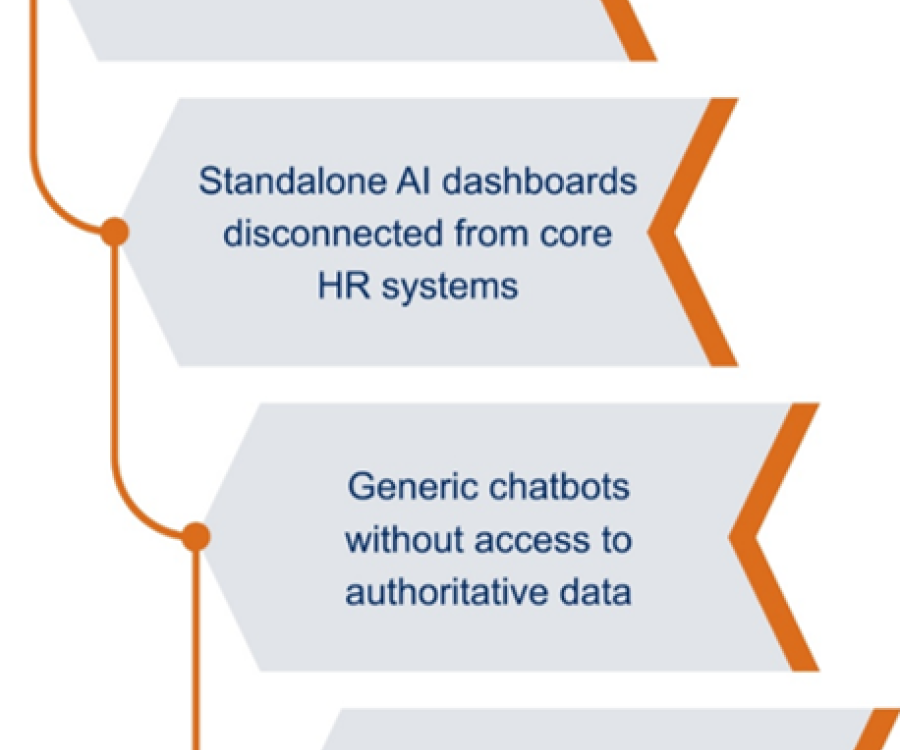
These initiatives struggle because they exist outside daily workflows. Without a direct link to action, insight rarely translates into outcomes.
Barriers to Effective AI Adoption
Across HR functions, the same constraints appear repeatedly:
Value uncertainty: Benefits are discussed conceptually but not measured operationally.
Data readiness: Fragmented HR, payroll and time systems limit AI effectiveness.
Capability and confidence: HR teams must trust AI outputs before acting on them.
Governance and ethics: Clear accountability and transparency are non negotiable.
Progressive organisations treat AI as an operational improvement program, not a technology rollout.
A Practical Path Forward
Successful AI adoption in HR tends to follow a simple pattern:
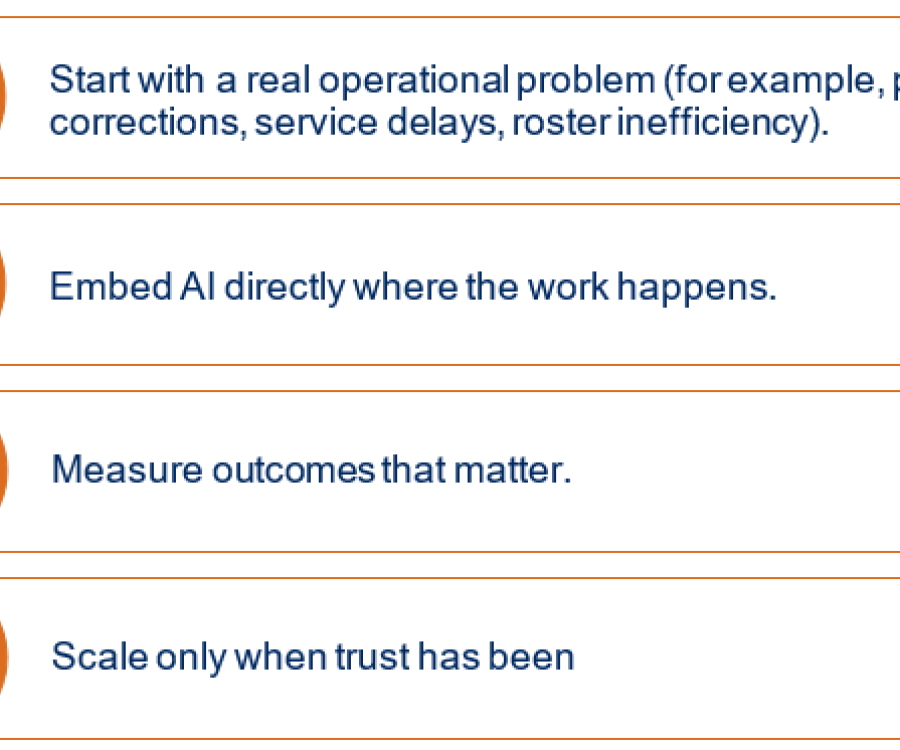
This approach aligns with broader HR technology trends identified by Sapient Insights Group, where organisations using embedded AI are substantially more likely to report improved business and workforce outcomes.
Embedding AI Through Integrated Platforms
Reliable AI depends on reliable data.
Integrated HR, payroll and time platforms provide the foundation required for trustworthy intelligence. Frontier Software’s integrated HR and payroll solutions, including ichris and chatHR, are designed to support this model.
By embedding AI in core operational systems, Frontier enables organisations to improve accuracy, reduce risk and enhance employee service delivery without introducing unnecessary complexity.
AI is not positioned as a feature, but as operational infrastructure.
AI Becomes Strategic Only After It Proves Operational
AI in HR is no longer theoretical. Its value is practical.
Organisations seeing results start with the fundamentals: payroll accuracy, workforce planning and service delivery. Once these foundations are secure, AI becomes a strategic enabler rather than a speculative investment.
For HR leaders, the question is no longer whether AI belongs in HR, but where it should begin.