
The AI-Aware Workforce: A New Reality for HR
Until now, the BYOAI conversation has mostly centred on how HR teams use artificial intelligence. But a bigger shift is happening on the other side of the table: employees are using AI too and they are doing it inside your processes, using it to challenge your decisions and AI is often engaged before HR has even entered the room.
The Morning of a Performance Review
Picture this: it’s the morning of a performance review. Before the meeting, the employee has run their manager’s recent written feedback through a generative AI tool. They ask it to flag inconsistencies, sense-check the language against the enterprise agreement and help shape a set of calm, but pointed, questions. By the time they sit down with the HR Business Partner, they’re coming in with a level of preparation that used to require external advice.
Across the table, the HR Business Partner brings experience, context and a manager briefing prepared the previous afternoon. None of that disappears. But it is no longer uncontested ground. The information gap that once defined these interactions has narrowed and, in many organisations, it has done so quietly.
A One-Sided Conversation No More
For years, the AI-in-HR discussion has been framed almost entirely from the employer’s perspective: risk, governance, and the promise of productivity if the technology is adopted carefully. The underlying assumption is that capability starts inside the organisation and is managed outward.
That is not what’s happening in practice.
Employees are bringing their own tools to work and using them directly on HR processes. They’re interpreting enterprise agreements, drafting grievances, pressure-testing redundancy decisions and turning up to meetings with structured notes and citations that managers may never have looked at. What once required specialist support is now available in a browser tab and often in under an hour.
The Signal from the Fair Work Commission
You can see early signs of this shift in the Fair Work Commission. Both the volume and the character of claims are changing. In early 2026, Commission President Adam Hatcher observed that AI-assisted filings were adding materially to the Commission’s workload. Over a three-year period, total matters rose by around 70% and unfair dismissal claims increased by more than 40% between 2022–23 and 2024–25. What’s striking is not only the scale but the pattern: the usual link between economic conditions and claim volumes appears to be weakening, suggesting a different driver is at play.
The claims themselves reflect it. HR teams are seeing complaints that are more structured, more assertive and often more legalistic than expected. As reported by Anastasia Bare in HR Leader Australia, employees who may once have struggled to put a grievance into words can now produce detailed correspondence without union representation and without the cost of legal advice.
Not all of it stands up. Some submissions include errors or cite legal principles that do not apply. But even a weak claim takes time to assess and respond to. It pulls in managers, absorbs HR capacity and can introduce risk. And, occasionally, it exposes a real procedural weakness that might otherwise have gone unchallenged.
It’s tempting to see this as a simple volume problem. The more significant change is the level of scrutiny now applied to everyday employment processes.
When Words Become Determinative: The O’Hurley Case
A Fair Work Commission decision shows how small details can carry new weight under that scrutiny. In Daniel O’Hurley v Cornerstone Legal WA Pty Ltd, an employer used a generative AI tool to draft a letter intended to confirm an employee’s abandonment of employment. The wording did not land as intended. The Commission construed the letter as a termination, which meant the employer could not rely on abandonment and the matter proceeded as a general protections claim.
What might once have been treated as routine correspondence became determinative. The lesson is not simply “don’t use AI”. It’s that outcomes can hinge on precise language and on the care taken to review it. That level of scrutiny is no longer confined to legal advisers. Increasingly, employees are bringing it into HR processes as a matter of course.
Procedural Fairness Under New Conditions
Procedural fairness has always meant giving employees a genuine opportunity to respond, running transparent processes and making decisions based on accurate information. Those expectations haven’t changed. What has changed is the environment in which they’re tested. Employees now have tools to interrogate what’s put in front of them, compare it to publicly available material and prepare a response before the conversation even begins.
For HR teams, that changes what “good practice” looks like on the ground.
The Pressure on Documentation and Written Communication
Much of that pressure comes back to the quality of what’s already on file.
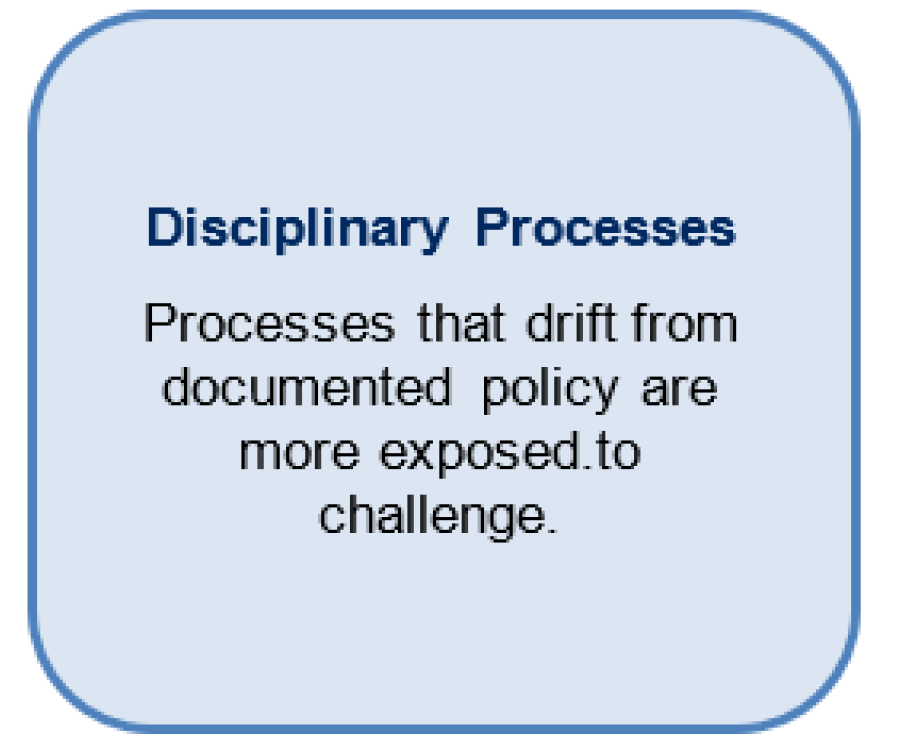
When documentation is thin, it is easier to spot. When similar situations have been handled differently, those differences are more likely to be surfaced and compared. When communication leans on generic templates and broad phrasing, it becomes easier to challenge. These aren’t new weaknesses, but they are now faster to find and harder to dismiss.
Written communication is under pressure. Vague feedback, loosely defined performance measures and expectations that are implied rather than stated can be assessed in minutes. If an employee uses AI to review a performance improvement plan and finds no measurable criteria that won’t stay an informal observation, it will shape how the process is understood and, if needed, disputed.
Engaging on the Merits – A More Important Discipline
This also changes how HR needs to respond. AI doesn’t make an employee’s position correct, but it can make it more polished, more detailed and more formal. A grievance that appears AI-assisted still deserves a thoughtful response. Engaging with the substance, rather than fixating on how it was written, is becoming a critical discipline.
That raises the bar. It also removes ambiguity.
When employees arrive better prepared, they engage with the process more deliberately. And when that preparation exposes gaps or inconsistencies, it creates a chance to correct course early before issues harden into complex disputes.
The Risk of Focusing Only on Governance
If organisations respond by focusing only on governance, they risk missing that opportunity. Governance matters, especially for data security and appropriate tool use, but it doesn’t answer a more practical question: are your existing processes strong enough to stand up to closer examination?
The More Enduring Changes
The changes that last are often less visible: clearer communication, more consistent decision-making and day-to-day practice that genuinely matches policy.
A Signal, Not Just a Warning
The rise in matters before the Fair Work Commission is often read as a warning about the misuse of technology. It can also be read as a signal: employees are better equipped to question decisions that affect them and increasingly able to do so in a formal, structured way.
Some processes will stand up well to that pressure. Others won’t. The difference is less about whether AI is present and more about whether the process was sound to begin with and designed to be defensible under close review.